Lease Started Before Truck Pickup, What Brokers Must Do Immediately
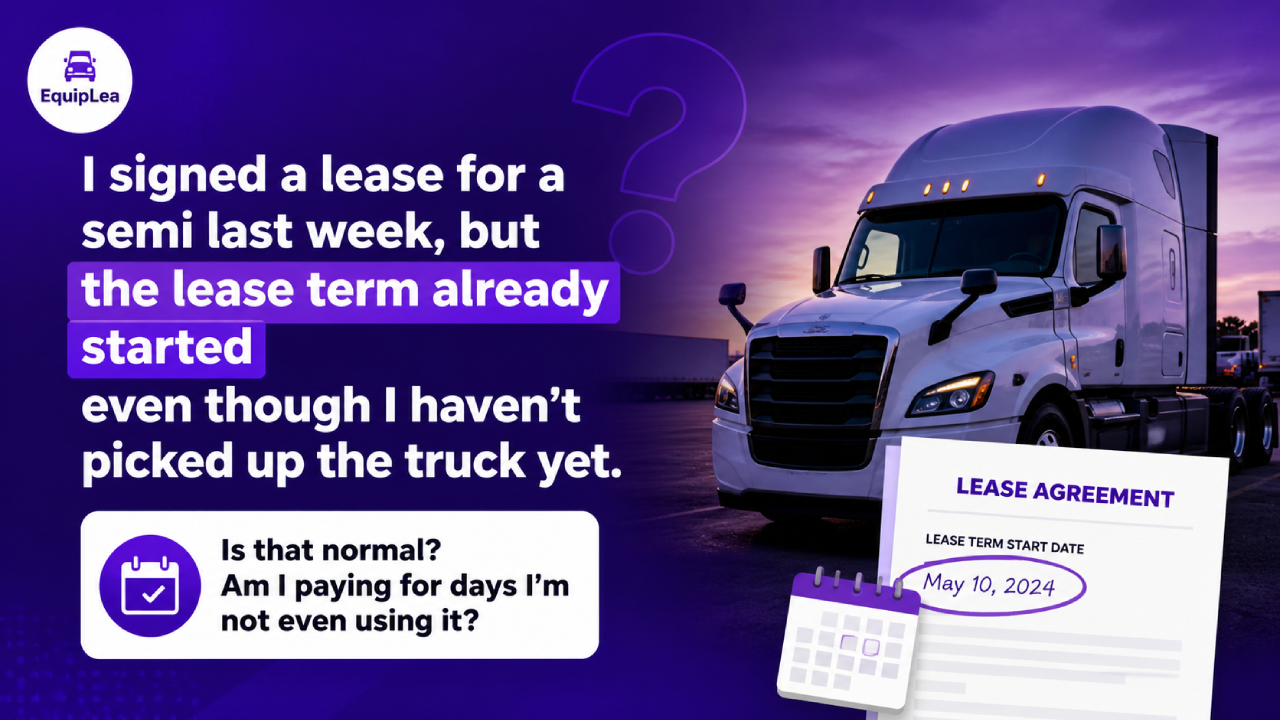
It sounds like a small timing issue, but for a customer, it feels like paying for something they do not even have yet. In equipment finance, this situation can damage trust faster than almost anything else.
A lease starting before delivery is one of the most common mistakes new brokers make, and how it is handled decides whether the relationship survives or not.
Why This Happens
Most of the time, the lease start date is triggered by funding, not delivery. Once the lender releases funds to the dealer, the contract can go live. From the lender’s perspective, the asset may be treated as active, even if the customer has not physically received it.
This mismatch usually happens because the broker pushed for faster funding, the dealer invoiced before actual delivery, insurance or registration was activated early, or the lender automatically started the contract on the funding date.
The Real Problem Is Trust
Customers do not think in terms of funding cycles or lender policies. They think in simple terms:
“I do not have the truck. Why am I paying?”
If the broker responds with technical explanations, the situation gets worse. This is not only a contract problem anymore. It becomes a trust problem.
What the Broker Should Do Immediately
The right approach is not to defend the process. The right approach is to fix the outcome.
First, the broker should acknowledge the issue clearly. Avoid saying “this is standard” or “this is how lenders work.” Instead, confirm that the situation is not ideal and that you are taking ownership.
A simple response works best:
“You are right to question this. The lease should ideally align with when you receive the truck. Let me review this and fix it for you.”
Second, the broker should identify what triggered the lease start. Check whether the deal has already been funded, whether the lender has booked the contract, and whether there is any flexibility left.
Third, the broker should contact the lender immediately. In many cases, lenders may be open to adjustments, especially when the asset has not been delivered yet.
Possible Fixes
Depending on lender policy, the broker can request one of the following solutions:
- Shift the lease start date to the actual delivery or pickup date
- Defer the first payment to offset the unused days
- Apply a credit for the gap period
- Adjust the payment schedule so the customer is not financially penalized
If the lender is not flexible, the broker should step in. Covering a small cost or offering a goodwill adjustment is far cheaper than losing the customer’s trust.
Why This Matters More for New Brokers
For an experienced broker with a strong client base, one mistake can be managed. For a new broker, this type of issue can define their reputation.
Customers remember how problems are handled. They do not only remember whether everything went smoothly. If the broker fixes this properly, the situation can actually build trust instead of breaking it.
How to Prevent This in the Future
This situation is avoidable with a simple process.
Before submitting a deal for funding, the broker should confirm that the truck is ready for delivery or pickup. The lease start date should be aligned as closely as possible with the date the customer receives the asset.
A broker should also add a final checklist step before funding:
- Has the customer picked up the truck?
- If not, is the delivery date confirmed?
- Does the lender know the actual delivery date?
- Will the lease start date match the customer’s possession date?
The Bigger Lesson
Equipment finance is not just about approvals and funding. It is about timing, expectations, and clarity.
When those fall out of sync, even a properly structured deal can feel unfair to the customer.
The broker who understands this will not just close deals. They will build long-term clients.